


A kitchen remodel timeline is one of the first things homeowners want to understand before starting a renovation project. Knowing what happens at each stage helps you plan your daily routine, prepare for temporary inconveniences, and set realistic expectations for when your new kitchen will finally be ready to use.
Every kitchen remodel is different, but most projects follow a similar sequence of events. Understanding this flow makes the entire process feel far less overwhelming.
Understanding the Kitchen Remodel Timeline
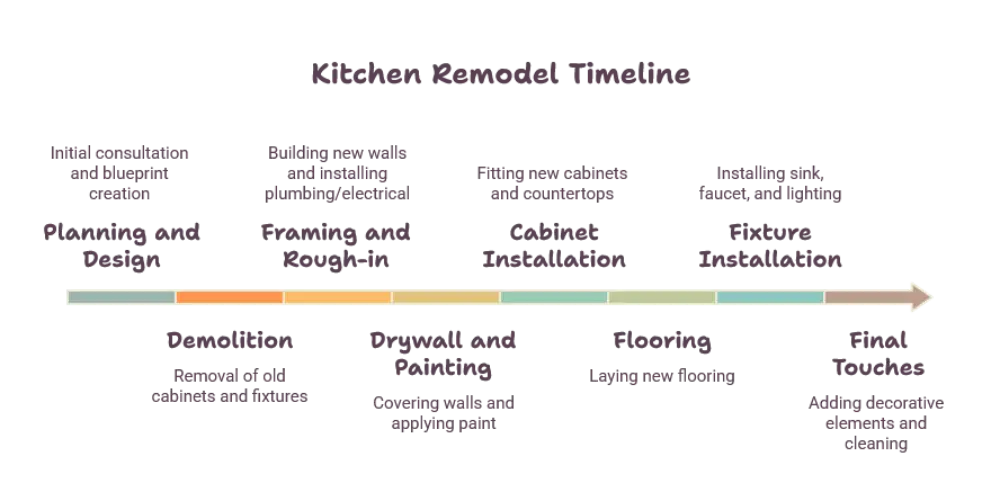
A full kitchen remodel typically moves through several distinct phases. These include planning and design, demolition, structural work, installation, and final finishing touches. Each phase depends on the one before it, so delays in one area can shift the entire schedule.
The size of your kitchen, the scope of changes, and how quickly decisions are made all influence how long the project takes from start to finish.
Planning and Design Phase
Setting Your Vision
Before any physical work begins, this stage is about defining what you want your new kitchen to look and feel like. You will think through layout preferences, storage needs, appliance placement, and overall style.
This is also when you choose materials, finishes, and fixtures. Taking time here prevents costly changes once construction is already underway.
Finalizing Layout and Permits
Once the design is locked in, contractors typically draw up detailed plans. If your remodel involves moving plumbing, electrical lines, or walls, permits are usually required.
Permit approval times vary by location, so this stage can sometimes take longer than expected. It is smart to build in extra time here rather than assume everything will move quickly.
Demolition Phase
Demolition marks the official start of hands on construction. Old cabinets, countertops, flooring, and sometimes walls are removed to make way for the new design.
This phase tends to move quickly, but it can also be noisy and dusty. Homeowners often find it helpful to set up a temporary kitchen space elsewhere in the home during this time.
Structural and Rough Work
Plumbing and Electrical Updates
Once demolition is complete, plumbers and electricians move in to update or reroute lines based on the new layout. This might include relocating a sink, adding outlets for new appliances, or installing lighting circuits.
This behind the scenes work is essential and sets the foundation for everything that follows.
Framing and Drywall
If your remodel involves structural changes, framing happens next. After that, drywall is installed and finished to create smooth, paint ready walls.
This stage transforms the space from a construction zone into something that starts to resemble a real room again.
Installation Phase
Cabinets and Countertops
Cabinet installation is often considered the turning point of a kitchen remodel. Once cabinets are in place, the room begins to take shape visually.
Countertops are typically measured after cabinets are installed to ensure a precise fit, which means there is often a short waiting period before they arrive and get installed.
Flooring and Backsplash
Depending on the type of flooring chosen, this step may happen before or after cabinet installation. Backsplash tile is usually one of the final surface elements added, tying together the countertops and cabinetry.
These details bring texture, color, and personality into the finished design.
Finishing Touches
This stage includes installing appliances, connecting plumbing fixtures, adding hardware to cabinets, and completing any painting or trim work. Lighting fixtures are also installed and tested during this phase.
It is often one of the most exciting parts of the process because the kitchen starts to feel functional and complete.
Final Walkthrough and Cleanup
Once installation is finished, a final walkthrough allows you and your contractor to review the completed space together. This is the time to point out anything that needs adjustment or touch up work.
Professional cleaning typically follows so the kitchen is ready for everyday use right away.
Factors That Can Affect Your Timeline
Several variables can influence how long a kitchen remodel actually takes. Custom cabinetry, specialty materials, and complex layout changes often require more time than standard options.
Weather conditions, material availability, and how quickly decisions are finalized can also play a role. Clear communication with your contractor throughout the project helps minimize unexpected delays.
Tips to Keep Your Remodel on Schedule
Making decisions early, especially around materials and finishes, helps avoid pauses in the schedule. Ordering products with longer lead times as early as possible also keeps the project moving smoothly.
Staying in regular contact with your contractor and responding quickly to questions or approvals can prevent unnecessary slowdowns.
Conclusion
A kitchen remodel timeline involves several connected phases, from initial planning to the final walkthrough. While every project is unique, understanding the general flow helps you prepare mentally, physically, and logistically for the journey ahead.
With realistic expectations and good communication, your kitchen remodel can move forward smoothly, resulting in a space you will enjoy for years to come.
Frequently Asked Questions
How long does a typical kitchen remodel take?
Most full kitchen remodels take several weeks to a few months, depending on the size of the space and the complexity of the changes involved.
What is the first step in a kitchen remodel timeline?
The first step is the planning and design phase, where layout, materials, and finishes are decided before any construction begins.
Which phase of a kitchen remodel usually takes the longest?
The installation phase, including cabinets, countertops, and finishing details, often takes the most time due to precise measurements and coordination between trades.
Can weather affect a kitchen remodel timeline?
Yes, weather can impact delivery schedules and certain types of work, especially if the project involves any exterior access or structural changes.
How can I help keep my kitchen remodel on schedule?
Making early decisions on materials and finishes, ordering products with long lead times in advance, and communicating promptly with your contractor all help keep the project on track.


