

If you are planning a home renovation, new build, or major repair, one of the first questions on your mind is likely the cost to hire a general contractor. Understanding this cost is crucial before you sign any contracts, allocate a budget, or even begin collecting quotes. General contractors serve as the backbone of most construction projects, managing everything from subcontractors and material procurement to permits and timelines. Yet many homeowners feel uncertain about what to expect when it comes to pricing.
This guide breaks down everything you need to know about the cost to hire a general contractor, including how they charge, what factors influence the final number, and how to make the most of your investment.
- What Does a General Contractor Actually Do?
- How Do General Contractors Charge for Their Services?
- Key Factors That Influence the Cost to Hire a General Contractor
- What Is Typically Included in a Contractor's Quote?
- How to Get the Most Value from Your General Contractor
- Signs You Are Getting a Fair Deal
- When Is It Worth Paying More for a General Contractor?
- FAQs
What Does a General Contractor Actually Do?
Before diving into pricing, it helps to understand what you are paying for. A general contractor, often referred to as a GC, is responsible for overseeing an entire construction or renovation project from start to finish. They coordinate all moving parts so you do not have to manage individual tradespeople on your own.
Key responsibilities typically include:
- Hiring and supervising subcontractors such as electricians, plumbers, and carpenters
- Pulling the necessary permits from local authorities
- Ordering and managing materials and deliveries
- Ensuring the project stays on schedule and within scope
- Serving as the main point of contact between the homeowner and the work crew
- Conducting quality control checks throughout the project
Hiring a general contractor essentially means hiring a project manager who has the expertise to handle complexity that would otherwise fall on your shoulders.
How Do General Contractors Charge for Their Services?
Understanding the cost to hire a general contractor starts with understanding their fee structures. There are several common methods contractors use to bill for their work.
Percentage of Total Project Cost
One of the most widely used methods is charging a percentage of the total project cost. In this model, the contractor adds their fee on top of all labor and materials. This percentage typically reflects their management, overhead, and profit margin.
This method aligns the contractor’s earnings with the scope of work, meaning larger or more complex projects naturally carry a higher total fee.
Fixed or Flat Fee
Some contractors prefer to offer a fixed price for the entire project. This gives homeowners a clear picture of their financial commitment from day one. The contractor assesses the work, calculates all costs, and presents a single number.
Fixed fees are ideal for well-defined projects where the scope is unlikely to change. Any additions or changes to the project scope can result in change orders, which add to the final cost.
Cost-Plus or Time and Materials
In a cost-plus contract, the homeowner pays for all actual costs incurred including materials and labor, plus an additional fee for the contractor’s services. This model is common on projects where the full scope is difficult to predict upfront, such as historic restorations or complex renovations.
While cost-plus arrangements offer flexibility, they require close budget monitoring since costs can escalate if the project scope expands.
Hourly Rate
Some smaller contractors or those handling limited portions of a project may charge by the hour. This is more common for consulting, oversight-only roles, or very small scopes of work.
Key Factors That Influence the Cost to Hire a General Contractor
No two projects are identical, which is why contractor costs vary so significantly. Here are the primary factors that influence what you will pay.
Project Size and Complexity
Larger projects require more management, more subcontractors, and longer timelines. A simple bathroom remodel involves far fewer moving parts than a full home addition or custom build. As complexity increases, so does the contractor’s time investment and therefore their fee.
Geographic Location
Where your project is located plays a major role in pricing. Urban areas and regions with a higher cost of living typically see higher contractor fees. Labor markets, local permit costs, and regional demand all contribute to geographic pricing differences.
Materials and Finishes Selected
While the contractor does not manufacture materials, the type of materials chosen directly affects overall project cost. High-end finishes, specialty materials, or custom fabrications require more sourcing effort and careful installation, which can influence the contractor’s fee when priced as a percentage.
Permits and Inspections
Most structural, electrical, plumbing, and HVAC work requires permits from local governing bodies. Contractors often handle the permitting process on behalf of the homeowner, and the cost of those permits is factored into the project budget. Complex projects in strict jurisdictions may require multiple permits and inspections.
Timeline and Urgency
Projects with tight deadlines may require overtime from subcontractors or expedited material sourcing, both of which carry premium costs. If your timeline is flexible, you may be able to negotiate more favorable pricing.
Contractor Experience and Reputation
A contractor with decades of experience, a strong portfolio, and positive client references typically charges more than someone newer to the trade. That said, experienced contractors often deliver better results, encounter fewer costly mistakes, and complete projects more efficiently.
Scope Changes During Construction
One of the most common budget busters in any construction project is scope creep, which refers to changes made after the original contract is signed. Each modification typically triggers a formal change order with associated costs. Defining your project scope clearly from the beginning is one of the best ways to keep costs predictable.
What Is Typically Included in a Contractor’s Quote?
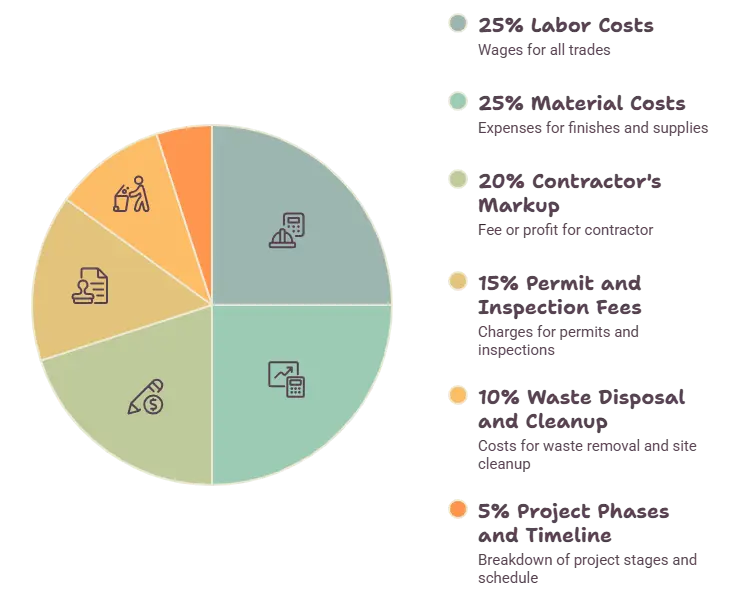
When you receive a quote from a general contractor, understanding what is and is not included helps you compare bids accurately.
A comprehensive quote should include:
- Labor costs for all trades involved in the project
- Material costs or allowances for finishes and supplies
- Contractor’s management fee or markup
- Permit and inspection fees
- Waste disposal and site cleanup
- A breakdown of the project phases and timeline
Always ask for an itemized quote rather than a single lump sum. This makes it easier to understand where your money is going and to compare multiple bids on an equal footing.
How to Get the Most Value from Your General Contractor
Hiring a general contractor is a significant financial commitment. Here are practical ways to protect your investment and get the best possible outcome.
Get Multiple Bids
Collecting at least three quotes from different contractors gives you a clearer picture of the market rate for your project. It also provides leverage and insight into how each contractor plans to approach the work.
Check Credentials and References
Verify that any contractor you consider is properly licensed and insured in your state. Ask for references from past clients and take the time to follow up with them. Online reviews and portfolios can also provide helpful context.
Review the Contract Carefully
Never begin work without a detailed written contract. It should outline the full scope of work, payment schedule, timeline, warranty terms, and how disputes or changes will be handled. If anything is unclear, ask for clarification before signing.
Communicate Clearly Throughout the Project
Regular communication with your contractor helps catch issues early before they become expensive problems. Establish a preferred communication method and agree on how frequently you will receive progress updates.
Avoid Making Changes Mid-Project
Every change order adds time and money to your project. Finalize your design decisions, material selections, and layout preferences before work begins to minimize costly modifications along the way.
Signs You Are Getting a Fair Deal
Not every affordable quote represents good value, and not every high quote means premium quality. Here are signs that a contractor is offering fair and honest pricing.
A fair contractor will provide a clear and detailed written estimate, be transparent about their markup and subcontractor costs, carry valid liability insurance and workers’ compensation coverage, have a verifiable history of completed projects similar to yours, and communicate openly about potential risks or unknowns that could affect the final cost.
Be cautious of unusually low bids. They can indicate cut corners, unlicensed subcontractors, or the use of substandard materials. A bid that seems too good to be true often comes with hidden costs or quality issues discovered later.
When Is It Worth Paying More for a General Contractor?
Sometimes the higher-priced contractor is the smarter choice. Paying a premium may be worthwhile when the contractor has specialized expertise your project requires, when the project involves complex permitting or code compliance, when speed and reliability are critical to your plans, or when you want a single point of accountability throughout the build.
A seasoned contractor who manages your project efficiently and keeps rework to a minimum can actually save you money compared to a cheaper option who requires multiple corrections along the way.
FAQs
What is the average cost to hire a general contractor?
The cost to hire a general contractor varies widely depending on project size, location, and scope. Most contractors charge either a flat fee or a percentage of the total project cost. Rather than quoting a single average, it is best to collect itemized bids from at least three contractors in your area to understand the realistic market rate for your specific project.
Do general contractors charge for estimates?
Many general contractors offer free estimates for straightforward residential projects. However, for very complex or commercial projects, some contractors charge a consultation or estimating fee. Always ask upfront whether an estimate carries any cost before scheduling an appointment.
What is the difference between a general contractor and a subcontractor?
A general contractor manages the overall project and is your primary point of contact. Subcontractors are specialists such as electricians, plumbers, tile setters, and roofers who are hired by the general contractor to complete specific portions of the work. You typically deal with the GC, not the individual subcontractors
Can I negotiate the cost with a general contractor?
Yes, contractor pricing is often negotiable, especially for larger projects or during slower seasons when demand for construction services is lower. You can also reduce costs by being flexible on your timeline, selecting standard materials instead of premium options, or scaling back the scope of work.
What should I do if my project goes over budget?
Start by reviewing the original contract to determine whether the overrun stems from agreed-upon change orders, unforeseen site conditions, or unauthorized charges. Have an honest conversation with your contractor and request a detailed breakdown of all additional costs. Most reputable contractors will work with you to find solutions that keep the project moving without compromising quality.


