


Key Highlights
- The average cost of chimney repair for simple jobs ranges from $160 to $750.
- Repair costs are heavily influenced by the extent of the damage, from minor fixes to full rebuilds.
- Repairing deteriorating mortar joints is crucial for the structural integrity of the chimney.
- The chimney crown protects the structure from water damage, and its repair cost varies by severity.
- Annual inspections help you catch small issues before they turn into major chimney repair projects.
- Flue repair is one of the most expensive tasks, costing up to $100 per square foot.
Introduction
Your chimney is a vital part of your home’s safety and structure, but it can suffer from wear and tear over time. Understanding the potential repair costs is the first step toward responsible home maintenance. This guide will walk you through how to estimate the cost of chimney repair, from small fixes to major overhauls. Knowing what to expect financially helps you make informed decisions to protect the chimney and your home for years to come.
Understanding Chimney Masonry Repair Costs
The cost of chimney repair can vary widely. The final price depends on many factors, with the most significant being the extent of the damage. A few small cracks will be much less expensive to fix than major structural problems.
To get an accurate idea of your costs, you need to understand what kind of chimney repair is required for the chimney. Below, we’ll explore what masonry repair involves, why accurate estimates are important, and the typical costs you can expect.
What Is Chimney Masonry Repair?
Chimney masonry repair involves fixing the brick, stone, and mortar components of your chimney. The goal is to restore its structural soundness and ensure it functions safely. This type of repair addresses issues like crumbling mortar, cracked bricks, and water damage.
When you have a damaged chimney, the necessary repairs can range from simple to complex. For example, sealing small cracks is a minor fix, while repointing involves replacing deteriorating mortar joints to strengthen the structure. In cases of severe damage, a partial or complete rebuild of the chimney might be required.
Ultimately, chimney masonry repair is about more than just appearances. It ensures your chimney can safely vent smoke and harmful gases, protecting your home and family. A professional Masonry Contractor can identify the correct type of repair your chimney needs.
Why Accurate Cost Estimation Is Important
Getting an accurate estimate for your masonry repair helps you budget properly and avoid unexpected expenses. When you understand the potential repair costs upfront, you can plan financially and make confident decisions about how to proceed with the work on the chimney.
Ignoring what seems like a small problem can lead to more costly repairs later on. Issues that require immediate attention, like water leaks or significant cracks, can worsen quickly. An accurate cost of chimney repair estimate highlights the severity of the problem and the financial benefit of addressing it promptly.
A professional chimney inspection is the best way to determine the full extent of damage. A qualified expert can provide a detailed report and a precise quote, ensuring you know exactly what you’re paying for and why the work is necessary. This prevents small issues from becoming major, expensive problems.
Overview of Typical Cost Ranges in the US
The cost of chimney repair varies based on the job’s complexity. For common issues, the average cost in 2024 is around $455, with most homeowners paying between $160 and $750. However, these figures are for simple repairs and don’t include major structural work.
More extensive projects like rebuilding a section of the chimney can cost between $1,000 and $5,000. For a complete chimney replacement, you could be looking at costs up to $15,000. These repair costs for different types of work can also be influenced by regional price differences in labor and materials.
Here’s a look at some typical chimney repair costs.
| Repair Type | Typical Cost Range |
|---|---|
| Minor Repairs (e.g., small cracks, cap) | $160 – $750 |
| Chimney Crown Repair | $150 – $3,000 |
| Repointing/Tuckpointing | $500 – $2,500 |
| Flue Liner Replacement | $625 – $7,000 |
| Partial Chimney Rebuild | $1,000 – $5,000 |
Common Types of Chimney Masonry Repairs
Chimney repair isn’t a one-size-fits-all job. There are several common chimney repairs that address specific problems, from weakened mortar to a damaged crown. The type of repair work needed will depend on the issue your chimney is facing.
Understanding these different types of repairs can help you recognize what your chimney might need. In the following sections, we will cover some of the most frequent fixes, including repointing, crack repair, and crown restoration, to give you a clearer picture of the process.
Repointing and Tuckpointing
Over time, the mortar joints between your chimney’s bricks can wear away due to weather exposure. This deterioration can weaken the chimney structure and allow water to seep in. Repointing is the process of removing the old, damaged mortar and replacing it with new mortar to restore strength.
Tuckpointing is a similar repair work process, but it focuses more on aesthetics. It uses two different colors of mortar to create the illusion of very fine, clean lines between the bricks. While repointing is purely structural, tuckpointing enhances the appearance of that part of the chimney while also strengthening the mortar joints.
Both repointing and tuckpointing are essential for maintaining your chimney’s integrity. The cost for this work typically ranges from $500 to $2,500, depending on the size of the area being repaired.
Masonry Crack Repair and Brick Replacement
Visible cracks in your chimney’s masonry are a clear sign of a problem. For small cracks, applying a waterproof sealant can be a simple and effective fix, preventing moisture from entering and causing more chimney damage. This simple step can prevent bigger issues down the line.
However, large cracks can indicate more serious structural damage. In these cases, sealing is not enough. You may need brick replacement, where a mason removes the damaged bricks and installs new ones. This is especially important if you see spalling, where the brick face flakes or pops off due to moisture freezing and expanding inside it.
The extent of the damage will determine the right approach. A professional assessment can tell you whether you need simple crack repair or a more involved brick replacement to ensure your chimney is safe and stable.
Chimney Crown Repair
The chimney crown is the concrete or mortar slab at the very top of the chimney. Its job is to shield the chimney structure from weather damage by directing rain and snow away. When the crown cracks or deteriorates, water can get into the masonry, leading to costly repairs.
Minor crown repairs, like sealing small cracks, can cost between $150 and $350. However, if the damage is extensive and threatens the chimney’s integrity, a full replacement may be necessary. A new crown can cost up to $3,000.
It’s important not to confuse the chimney crown with the chimney cap, which is a metal cover that sits over the flue opening. While both are important, crown repair is a masonry job that protects the entire top of the chimney structure from water infiltration.
Flue and Liner Masonry Work
The flue liner is a critical safety component inside your chimney. It contains the smoke and byproducts of combustion, protecting the chimney walls from heat and corrosion. A damaged flue liner can allow dangerous gases to leak into your home or lead to a chimney fire due to creosote buildup.
Depending on the type of chimney you have, flue repair can vary. For cracked clay tiles, repair costs can range from $65 to $100 per square foot. If the damage is widespread, you might need a full flue liner replacement, which can cost anywhere from $625 to $7,000.
Regular inspections by a chimney sweep can identify liner damage early. Addressing flue repair promptly is essential for safety and can prevent much higher repair costs in the future.
Minor vs Major Chimney Masonry Repairs
Not all chimney problems are created equal. Repairs are often categorized as either minor or major, and the difference between them is significant in terms of cost, time, and complexity. The extent of the damage is the primary factor that determines which category the necessary repairs fall into.
Minor repairs are typically quick fixes for cosmetic or early-stage issues, while major repairs address serious structural threats. Understanding this distinction will help you better grasp the cost of chimney repair and the urgency of the work.
Defining Minor Chimney Repairs
Minor repairs are generally simple repairs that address small-scale issues before they escalate. These jobs are often part of routine chimney maintenance and are much less expensive than major structural work. The goal is to correct problems while they are still manageable. The average cost for these minor repairs is usually between $160 and $750.
This type of repair targets specific, localized problems that don’t compromise the chimney’s overall stability. Think of them as preventative measures that keep your chimney in good working order and extend its lifespan.
Common examples of minor repairs include:
- Sealing minor cracks in the masonry.
- Patching small areas of deteriorating mortar joints.
- Replacing a damaged chimney cap.
Identifying Major Structural Repairs
Major repairs are needed when there is significant structural damage that threatens the integrity of the chimney. These extensive repairs are complex, costly, and crucial for home safety. A leaning chimney, for example, is a clear sign that major work is required immediately and may even call for an emergency chimney repair.
Unlike minor fixes, these jobs often involve rebuilding large sections of the chimney or, in some cases, the entire chimney. They address deep-rooted problems that have been left untreated or caused by a significant event. A professional Masonry Contractor is essential for this level of work.
Signs you need major repairs include:
- A leaning or tilted chimney stack.
- Widespread crumbling of bricks and mortar.
- Large, deep cracks running through the masonry.
Expected Costs for Each Repair Category
The repair costs for minor and major repairs differ significantly. Minor repairs, such as sealing small cracks or replacing a chimney cap, are relatively affordable. You can typically expect to pay between $160 and $750 for these types of jobs.
On the other hand, major repairs come with a much higher price tag. The cost of chimney repair for a partial rebuild can range from $1,000 to $5,000. If the damage is so severe that a complete chimney replacement is needed, the cost can soar to $10,000 or even $15,000.
Ultimately, the final bill depends on the materials used, the labor involved, and the complexity of the work. Addressing issues when they are small is the best way to avoid the high costs associated with major repairs.
Factors Affecting Chimney Masonry Repair Costs
Several key factors determine the final price of your chimney repair. While the extent of the damage is the main driver, other elements like the chimney’s size, material, and accessibility also play a significant role in the total repair costs.
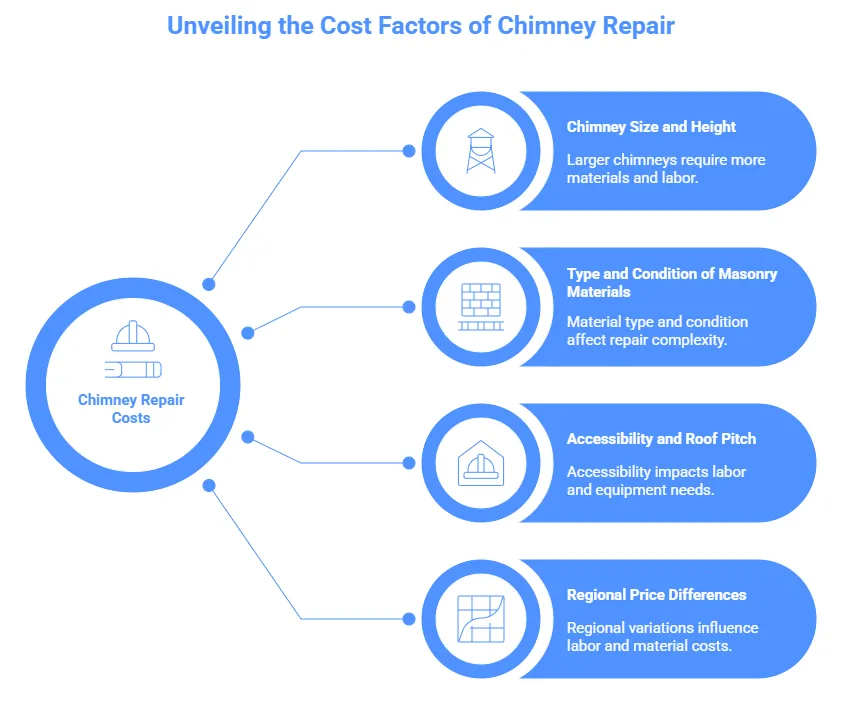
Understanding these factors can help you better anticipate the cost of chimney repair for your specific situation. In the sections below, we will explore how each of these variables influences the overall estimate for fixing your chimney.
Chimney Size and Height
The overall chimney size is a primary factor in determining repair costs. A larger and taller chimney requires more materials and more labor hours to repair, which naturally increases the price. For example, fixing large cracks across a wide chimney stack will cost more than sealing a few small ones on a shorter stack.
A tall chimney often requires scaffolding for masons to work safely. The cost of renting, setting up, and taking down this equipment adds to the total cost of chimney repair. If the chimney stack is low enough to be reached with a ladder, the repair cost per square foot may be lower.
When contractors provide estimates for jobs like rebuilding, they often price the work per linear or square foot. For instance, rebuilding a chimney stack can cost around $150 per linear foot, so a taller stack will be significantly more expensive.
Type and Condition of Masonry Materials
The type of chimney you have directly impacts your repair costs. Different masonry materials have unique properties and require specific repair techniques. A damaged chimney made of common brick may be less expensive to repair than one built with custom stone, as matching the materials can be more challenging and costly.
For example, repairing brick chimneys often involves repointing mortar joints, which has a different cost structure than fixing stucco chimneys. Stucco repairs might involve patching and refinishing larger surfaces. In general, brick repair costs can range from $300 to $15,000, while stucco repairs might fall between $900 and $4,000.
The condition of the materials also matters. If the bricks or stones are in good shape and only the mortar needs work, the cost will be lower. However, if the masonry itself is cracked or spalling, you will have the added expense of replacement materials.
Accessibility and Roof Pitch
The location of the chimney and its accessibility are major factors in the cost of chimney repair. If a chimney is hard to reach, masons will need more time and specialized equipment to perform the repair work safely. This extra effort translates to higher labor costs.
A steep roof pitch makes any work more dangerous and complex. Contractors will need to use safety harnesses and potentially build scaffolding to create a stable work platform. The added risk and setup time will be reflected in your final bill.
Conversely, if your chimney is on a flat or low-pitched roof and is easily accessible with a ladder, the repair costs may be lower. Good accessibility reduces the time and risk involved, allowing the Masonry Contractor to complete the job more efficiently.
Regional Price Differences Across the US
Where you live can have a notable impact on your chimney repair costs. Regional price differences are common across the United States due to variations in the cost of living, local demand, and the price of materials.
Labor rates are one of the biggest variables. A Masonry Contractor in a major metropolitan area with a high cost of living will likely charge more per hour than one in a rural town. This difference in labor rates can significantly alter the total cost of chimney repair.
Additionally, material costs can fluctuate from one region to another. By getting multiple quotes from local professionals, you can get a better sense of the going rate for chimney repair in your specific area and ensure you are getting a fair price.
Signs Your Chimney Needs Masonry Repair
Knowing what to look for can help you catch chimney issues before they become severe. Obvious signs like visible cracks and crumbling mortar joints are clear indicators that your chimney needs repair. Subtle clues like water damage on interior walls near the fireplace also signal a problem.
Paying attention to these warning signs and scheduling a chimney inspection can save you from more expensive fixes down the road. The following sections will detail the specific signs that require your immediate attention to maintain a safe and functional chimney.
Visible Cracks or Brick Damage
One of the most apparent signs that you need chimney repair is the presence of visible cracks in the bricks or mortar. Even small cracks can allow water to penetrate the masonry, which can freeze and expand in colder climates, turning minor issues into large cracks over time.
You should also look for spalling, which is when the surface of the brick flakes, peels, or pops off. This is a sign of moisture saturation and indicates that the brick is losing its integrity. The extent of the damage will determine whether simple repair work is sufficient or if brick replacement is necessary.
Regularly inspecting your chimney for these signs is a key part of chimney maintenance. Addressing visible damage quickly can prevent more serious structural damage and keep your repair costs manageable.
Water Leaks or Staining
Water is one of the biggest enemies of a chimney. If you notice water leaks or stains on the ceiling or walls around your fireplace, it’s a strong indication of water infiltration through your chimney structure. This could be caused by a cracked crown, failing flashing, or porous bricks.
Another sign of water damage is a white, chalky substance on the chimney’s exterior called efflorescence. This occurs when water seeps into the bricks and evaporates, leaving salt deposits behind. It’s a clear signal that moisture is getting into your masonry.
Ignoring these warnings can lead to serious problems like mold growth, wood rot in your home’s framing, and a compromised chimney structure. Addressing water leaks promptly is crucial to avoid these costly repairs and protect your home.
Deteriorating Mortar Joints
The mortar joints are the lines of mortar that hold your chimney’s bricks together. Over years of exposure to rain, wind, and temperature changes, this mortar can begin to crack, crumble, and fall out. This is a common form of weather damage.
When you see gaps or crumbling in the mortar joints, you have deteriorating mortar. This weakens the entire chimney structure and creates pathways for water to enter the masonry. If left unaddressed, it can lead to instability and more significant damage.
This problem requires chimney repair in the form of repointing, where the old mortar is removed and replaced with new, durable mortar. Addressing deteriorating mortar joints is essential for preserving your chimney’s strength and preventing higher repair costs associated with water damage from a leaky chimney crown or brickwork.
Chimney Material Choices and Their Cost Impact
The materials your chimney is made from play a big role in both its longevity and the potential repair costs you might face. The type of chimney, whether it’s brick, stone, or stucco, will influence the kind of maintenance it needs and how much that maintenance will cost.
Different chimney materials have varying levels of durability and require specific repair methods. In the following sections, we’ll compare some common chimney materials and discuss how they affect long-term maintenance needs and the overall cost of chimney repair.
Comparing Brick, Stone, Concrete, and Clay Tile Chimneys
Chimney materials vary widely in cost and repair needs. Brick is a classic choice but can be expensive to repair if damage is extensive. Stone chimneys are durable but can be costly to fix due to the specialized labor required to match the stone.
Prefabricated chimneys, often made of metal, are generally cheaper to repair than traditional masonry. On the other hand, concrete block chimneys are sturdy but can be prone to cracking. Inside the chimney, flue liners made of clay tile are long-lasting but expensive to replace, whereas stainless steel liners are more affordable but have a shorter lifespan.
Here is a comparison of typical repair costs for different chimney materials.
| Chimney Material | Typical Repair Cost Range |
|---|---|
| Brick | $300 – $15,000 |
| Stucco | $900 – $4,000 |
| Metal/Prefabricated | $250 – $1,200 |
| Stone | Varies widely, often higher than brick |
Longevity and Maintenance Needs by Material
The longevity of your chimney depends heavily on its materials and how well it is maintained. A well-built brick or stone chimney can last for generations, but its components have different lifespans. For instance, the mortar joints will likely need repointing every 25 to 30 years.
The chimney materials used for liners also have varying lifespans. Traditional clay tile liners can last for 50 years, while modern stainless steel liners typically need replacement every 15 to 20 years. The chimney crown itself can last between 50 and 75 years if properly constructed and maintained.
Ultimately, regular maintenance is key to maximizing the longevity of all chimney components. Proactive repairs and annual inspections will help you avoid major issues and save you money in the long run, regardless of the materials used.
What’s Included in a Chimney Masonry Repair Quote?
When you receive a repair quote from a Masonry Contractor, it should be a detailed document that breaks down all the expected chimney repair costs. A thorough quote provides transparency and helps you understand exactly what you are paying for, from labor rates to materials.
A clear quote should outline all the necessary repairs and identify any potential additional fees. The following sections will cover the key components you should look for in a quote, including labor, materials, permits, and other services.
Labor and Material Breakdown
A proper repair quote will clearly separate labor rates from material costs. Labor is often the most significant part of the cost of chimney repair. For some repair work, like repointing, labor can account for up to 90% of the total price. The quote should specify the hourly rate or a total labor cost for the project.
Material costs will depend on the extent of the damage and the type of materials needed to match your existing chimney. This could include specific types of brick, stone, mortar, or a new flue liner. The quote should list these materials and their prices.
Having this breakdown helps you understand where your money is going. It provides a clear picture of the resources needed to complete the job and ensures there are no hidden costs.
Additional Fees and Services
Beyond labor and materials, a quote may include additional fees for other services or special circumstances. It’s important to review this section carefully so you are aware of all potential charges before work begins. These fees can add up, so clarity is key.
For example, if you require an emergency chimney repair outside of normal business hours, expect to pay a premium. Labor costs for emergency services can be as high as $300 per hour. Other services, like a pre-repair inspection or post-repair cleaning by a chimney sweep, might also be listed as separate line items.
Common additional fees can include:
- Scaffolding rental for tall or hard-to-reach chimneys.
- Hauling and disposal fees for debris from a rebuild.
- Travel charges if the contractor is located far from your home.
Inspection and Permit Costs
Before any major repair work begins, a professional chimney inspection is usually required to assess the damage accurately. The cost for a Level 1 inspection, which is a thorough visual check, averages between $130 and $380. This fee may be separate from the repair quote or bundled into the total cost.
For major projects like a partial or full rebuild, you will likely need a building permit from your local municipality. Permit costs can range from $150 to $2,000, depending on your location and the scope of the work. Minor repairs typically do not require a permit.
Your contractor should clarify who is responsible for obtaining and paying for the permit. A comprehensive quote will include these permit costs in the total estimate, so you have a complete picture of the cost of chimney repair from start to finish.
Conclusion
In conclusion, estimating your chimney masonry repair costs is a multifaceted process that involves understanding the types of repairs needed, factors affecting costs, and the materials involved. Recognizing signs of damage early can save you money and ensure your chimney remains safe and functional. Whether you’re dealing with minor repairs or major structural issues, taking the time to gather accurate estimates and consult with professionals is essential. By doing so, you can make informed decisions that will safeguard your home and investment. If you’re ready to get started, contact us today for a free consultation to discuss your specific chimney needs and receive tailored advice.
Frequently Asked Questions
Can homeowners insurance help cover masonry chimney repair costs?
Your homeowners insurance may cover chimney repair costs if the damage was caused by a sudden, covered event like a lightning strike or storm. However, most policies will not cover repair work needed due to lack of maintenance, general wear and tear, or neglect that compromises the structural integrity of the chimney.
Is it more cost-effective to repair or rebuild a masonry chimney?
It is generally more cost-effective to repair a chimney. However, if there are multiple major repairs needed or the structural integrity is severely compromised, a full chimney replacement might be the better long-term investment. Your contractor can help you compare the cost of chimney repair with the cost to rebuild the entire chimney.
What should I ask contractors before accepting a repair quote?
Before accepting a repair quote, ask for a detailed breakdown of the cost of chimney repair, including labor and materials. Inquire about their experience with your type of repair work, confirm they are licensed and insured, and ask about warranties on their work. Clarify all the necessary repairs identified during the inspection.


