

Key Highlights
- Always identify your masonry surface material before choosing a cleaning method to prevent damage.
- Avoid harsh chemicals and instead use specialized masonry cleaning products suitable for the job.
- Follow the manufacturer’s instructions for any cleaning solution and test it on a small, hidden area first.
- Use low water pressure and take proper safety precautions, including wearing protective gear.
- Ensure the removal of stains and biological growth is done correctly, followed by a thorough rinse with clean water.
- Proper cleaning protects your masonry, and great customer service from experts like Ramos Masonry ensures it’s done right.
Introduction
Are you wondering what mistakes you should avoid when cleaning masonry surfaces? A clean masonry surface can transform the look of your property, restoring its natural beauty. However, choosing the wrong cleaning method or using improper masonry cleaning products can cause irreversible damage. This guide will walk you through the most common errors people make. By understanding these pitfalls, you can ensure your brick, stone, or concrete stays strong and beautiful for years to come.
10 Common Mistakes to Avoid in Masonry Cleaning
Cleaning your masonry might seem straightforward, but many common mistakes can lead to discoloration, surface damage, or weakened structures. Using the wrong cleaning agent or an incorrect cleaning method can do more harm than good, turning a simple maintenance task into a costly repair project.
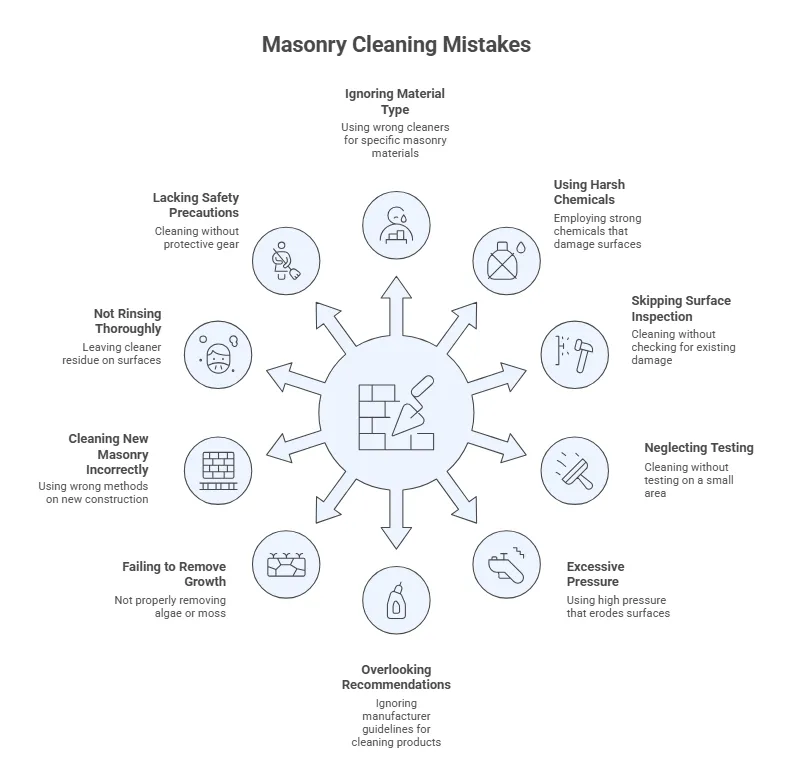
To help you protect your investment, we’ve outlined the top ten mistakes to avoid. From selecting the right masonry cleaning products to rinsing with clean water, following these tips will help you achieve a professional-looking result safely and effectively.
1. Ignoring Material Type Before Cleaning
Not all masonry is the same. The kind of surface you are cleaning—whether it’s natural stone, split-faced concrete, or smooth brick—dictates the appropriate cleaning method. For example, aggressive techniques that work on a rough texture might damage the polished finish of ground-faced units, which are meant to look like polished natural stone.
Before you begin, identify your material. Stone surfaces can be sensitive to certain chemicals, while conventional concrete blocks have a thin cement paste layer that can be stripped away by harsh cleaning, altering their appearance. Understanding what you’re working with is the first step toward a successful cleaning project.
Always consider the mortar joints as well. Mortar is often softer than the brick or stone it holds together. A cleaning method that is safe for the masonry unit might still erode the mortar, compromising the wall’s integrity. A gentle approach with clean water and a soft brush is often a safer starting point for delicate surfaces.
2. Using Harsh Chemicals Unsuitable for Masonry
A major mistake is reaching for harsh, general-purpose cleaning products. Can you use household cleaners on masonry? The answer is almost always no. Raw acids, such as muriatic acid, and other aggressive chemicals can dissolve the cement that binds masonry together, leading to etching, discoloration, and long-term damage.
Instead of risking it, you should opt for professional masonry cleaners. These are formulated specifically for chemical cleaning on brick or stone. A quality cleaning solution is designed to be effective without being overly corrosive. Many proprietary cleaning products are premixed to ensure the right balance for safe use.
When choosing from various cleaning products, look for those recommended by masonry experts or the manufacturer of your brick or stone. These specialized masonry cleaners are designed to work effectively while protecting the surface, ensuring you clean the wall without compromising its structural integrity or appearance.
3. Skipping Surface Inspection for Damage or Weakness
How do you safely clean brick without causing damage? It starts with a thorough inspection. Before applying any water or cleaner, carefully examine the entire masonry surface for pre-existing issues. Look for cracks, crumbling mortar, or loose bricks. Applying pressure or chemicals to a compromised wall can worsen the damage significantly.
The goal is to achieve a clean surface and uniformity of brick, not to create new problems. If you find significant issues, it’s best to make repairs first. A Masonry Contractor can assess the wall’s condition and fix any weak spots. This is especially important for older structures where the mortar may have a lower compressive strength.
This inspection is also a good time to identify the types of blemishes you’re dealing with. Is it general dirt, biological growth, or specific spots? Proper identification helps in the effective removal of stains later, ensuring you use the right approach for the right problem.
4. Neglecting to Test Cleaning Methods on a Small Area
One of the most critical steps in any masonry cleaning project is testing. Never apply a new cleaning agent or method to the entire wall without seeing how it reacts on a small, hidden spot first. This test patch, or sample panel, will show you if the product causes discoloration, etching, or any other unwanted effects.
The most effective methods for cleaning masonry surfaces are those that work without causing harm. Using test panels allows you to confirm the effectiveness of your chosen cleaning method. Apply the cleaning products exactly as you plan to on the larger area, including dwell time and rinsing. Then, let it dry completely.
After cleaning, view the test area from a distance to evaluate the results. This simple step, often recommended by field service experts, prevents you from making a costly mistake across your entire wall. If the test area looks good, you can proceed with confidence.
5. Employing Excessive Pressure During Washing
Pressure washing can be an effective tool, but using too much force is a recipe for disaster. High water pressure can blast away the surface of brick and concrete, expose aggregate, and severely damage soft mortar joints. This not only ruins the appearance of the masonry surface but can also lead to water penetration and structural issues down the line.
So, how do you safely clean brick without causing damage? Always start with low pressure. A safe range for most masonry is between 500 and 1000 PSI, but it’s best to begin even lower and only increase if necessary. Never use a pointed nozzle tip; instead, opt for a wide fan tip to distribute the pressure more evenly.
Keep the nozzle at least 12 inches away from the wall and spray at a 45-degree angle. This prevents the water from hitting the surface head-on, which is especially harsh on mortar joints. The goal of pressure washing is to clean the surface, not to erode it.
6. Overlooking Manufacturer Recommendations for Cleaning Products
Every cleaning product is different. Failing to read and follow the manufacturer’s instructions is a common and easily avoidable error. The product literature contains vital information about dilution rates, application methods, dwell times, and necessary safety measures. Guesswork can lead to an ineffective cleaning or, worse, permanent damage to your masonry.
Whether you’re using specialized masonry cleaners or another cleaning solution, the directions are there for a reason. They have been developed through extensive testing to ensure the best results while protecting the surface. If you have questions, don’t hesitate to reach out to the manufacturer’s customer service.
Ignoring these guidelines can also void any warranties on the product. Following the manufacturer’s instructions ensures you are using the cleaning solution as intended, which is the safest and most effective way to clean your brick or stone and achieve a uniform, professional finish.
7. Failing to Remove Biological Growth Properly
Seeing green or black stains from moss, algae, or mold on your masonry? Simply pressure washing it away isn’t enough. While water might remove the visible biological growth, it often leaves the roots behind, allowing it to grow back quickly. Proper removal requires a specialized approach that kills the organism completely.
Which cleaning products are recommended for removing biological growth from masonry? You should use a cleaning agent specifically designed for this purpose. These solutions penetrate the surface to kill the growth at its source, preventing a swift return. Apply the cleaning solution according to the manufacturer’s directions, letting it dwell for the recommended time.
After the cleaning agent has done its work, you can proceed with scrubbing or gentle washing. Finally, a thorough rinse with fresh water is essential to wash away both the dead biological growth and any remaining cleaning solution, leaving you with a truly clean and healthy surface.
8. Cleaning Newly Constructed Masonry Incorrectly
New masonry construction often needs cleaning to remove mortar smears, grout smears, and construction dust. However, cleaning it too soon or with the wrong technique can cause problems. One common error is trying to wipe away wet mortar smears, which only spreads the mess. It’s better to let the mortar become “thumbprint hard” before carefully cutting it off with a trowel.
What are the best practices for cleaning newly constructed masonry? Start by brushing the wall clean before scaffolding is moved. For stubborn mortar or grout smears, use a stiff fiber brush after the material has hardened. Special precautions are also needed for the removal of efflorescence, the white, powdery deposits that can appear on new brickwork.
When chemical cleaners are necessary on new masonry construction, use them with care. The mortar joints are still curing and are more vulnerable to damage. Always pre-wet the wall and use the mildest effective cleaner to avoid altering the color and texture of the new masonry.
9. Not Rinsing Thoroughly After Applying Cleaners
Applying a cleaning solution is only half the job. One of the most critical—and often rushed—steps is the final rinse. Leaving cleaner residue on the masonry can lead to streaking, discoloration, and even long-term chemical reactions that damage the surface. A thorough rinse with lots of clean water is non-negotiable.
Your cleaning method should always conclude with a generous rinse, starting from the top of the wall and working your way down. This prevents dirty water and cleaning solution from running over already-cleaned sections. A standard garden hose is often sufficient for rinsing, as high pressure isn’t necessary or desirable at this stage.
Remember the importance of a thoroughly prewetted surface before applying cleaners? The same principle applies to rinsing. A complete wash-down ensures that any remaining cleaning solution is fully flushed from the pores of the brick and mortar, leaving behind nothing but a clean, beautiful surface.
10. Attempting Masonry Cleaning Without Proper Safety Precautions
Masonry cleaning can involve risks, especially when using pressure washers or chemical cleaning products. Attempting this work without the right safety precautions can lead to serious injury. Your personal safety should always be the top priority. This begins with wearing the appropriate personal protective equipment (PPE).
At a minimum, you should wear safety glasses or goggles to protect your eyes from spray and debris. Waterproof gloves are essential when handling cleaning products, and sturdy, closed-toe shoes will protect your feet. Depending on the cleaning method, such as abrasive blasting or using strong chemicals, you may also need respiratory protection.
In addition to protective clothing, be aware of your surroundings. Protect nearby plants, windows, and metal fixtures from the cleaning products. If you’re working on a ladder, ensure it is stable. Taking these safety precautions seriously helps ensure your project is successful from start to finish without any accidents.
Best Practices and Industry Standards in Masonry Cleaning
Following best practices ensures your masonry cleaning project is both safe and effective. The core principle is to always use the least aggressive method that will get the job done. This often means starting with simple water and a brush before moving on to a chemical cleaning solution or low-pressure washing.
Choosing the right masonry cleaning products and testing them on a small area is a non-negotiable industry standard. By adhering to these best methods, you protect the integrity and appearance of your masonry. Next, we will explore specific techniques for various surfaces.
Methods for Safely Cleaning Various Masonry Surfaces
The safest cleaning method depends entirely on the kind of surface you are working with. A delicate, historic brick requires a much gentler touch than a modern, durable concrete wall. The goal is to remove dirt and stains without damaging the masonry or the mortar joints.
Before choosing your approach, identify the material and the type of stain. For general grime on a sturdy surface, water cleaning with a brush or low-pressure spray may be enough. For tougher stains, a carefully selected cleaning solution will be necessary. Always pre-wet the surface with clean water to prevent the cleaner from absorbing too deeply and to make rinsing easier.
Here are some common methods matched to different needs:
- Hand Cleaning: Using brushes and scrapers is best for removing fresh mortar smears during construction.
- Water Cleaning: Low-pressure washing or scrubbing with detergent and water is a non-aggressive cleaning method suitable for general dirt on most surfaces.
- Chemical Cleaning: Using a specialized cleaning solution is effective for tougher stains but requires careful testing and thorough rinsing.
Steps to Clean Brickwork According to Industry Standards
To clean brickwork properly and restore its original color depth, you should follow a systematic process. This ensures you work safely and effectively without missing any crucial steps. Using the right cleaning agent and technique is key to avoiding damage.
First, identify the type of brick and the nature of the stain. This will help you select the most appropriate cleaning products. Remember to always test your chosen cleaner on a small, inconspicuous patch of brickwork before proceeding with the entire wall.
Adhering to a structured approach helps guarantee a uniform and professional result. The table below outlines the standard industry steps for cleaning brickwork.
| Step | Action | Purpose |
|---|---|---|
| 1. Inspect & Protect | Examine the brickwork for damage and cover adjacent windows, plants, and metal. | To prevent worsening existing issues and protect surrounding areas from the cleaning agent. |
| 2. Pre-Wet Surface | Thoroughly wet the section of the wall you are about to clean with plain water. | To prevent the cleaner from absorbing too deeply and causing stains or damage. |
| 3. Apply Cleaner | Apply the diluted cleaning agent using a low-pressure sprayer or soft brush, working from bottom to top. | To allow the cleaner to begin breaking down dirt and grime without streaking. |
| 4. Dwell & Agitate | Let the cleaner sit for the time recommended by the manufacturer, then gently scrub if needed. | To give the cleaning agent time to work. Agitation helps lift stubborn stains. |
| 5. Thoroughly Rinse | Rinse the entire area with clean, low-pressure water, working from top to bottom. | To completely remove all traces of the cleaner and dirt, preventing residue and streaks. |
Techniques for Cleaning Concrete Masonry Effectively
Are there specific techniques for cleaning concrete masonry? Yes, and they often depend on the finish of the unit. For standard concrete masonry, a moderately aggressive cleaning method might be acceptable, but it can expose more aggregate and alter the color. Therefore, consistency across every square inch of the wall is crucial for a uniform appearance.
For the removal of stains from architectural units, like ground-faced or split-faced blocks, more care is needed. Abrasive cleaning should be avoided on polished, ground-faced units as it will ruin the smooth finish. For textured, split-faced units, abrasive methods may be suitable but should be tested first.
When a chemical cleaning product is used on concrete masonry, always pre-wet the surface and follow the manufacturer’s directions exactly. After allowing the product to work, a thorough rinse is essential to remove all residues. As with all masonry, the best cleaning method is the gentlest one that effectively gets the job done.
Choosing the Right Cleaning Products and Equipment
Selecting the correct masonry cleaning products is as important as the technique you use. The market is filled with options, but not every cleaning solution is right for your project. The ideal cleaning agent effectively removes dirt and stains without harming the brick, stone, or mortar.
Always start by identifying the type of stain you need to remove and the type of masonry you have. When in doubt, consult the manufacturer’s customer service for your masonry units or the cleaning product. They can provide recommendations tailored to your specific needs, ensuring a safe and successful outcome.
Recommended Cleaning Solutions for Masonry Surfaces
What are the most effective methods for cleaning masonry surfaces? They almost always involve a cleaning solution specifically made for the job. For general cleaning of dirt and grime, a mild detergent designed for masonry is often sufficient. These cleaners are gentle on stone surfaces and effective for light-duty tasks.
For more stubborn issues like efflorescence, rust, or heavy soiling, you will need to use stronger, targeted masonry cleaning products. These are formulated to tackle specific types of stains without the corrosive effects of undiluted acids. It’s crucial to match the product to both the stain and the surface material.
The best methods always prioritize safety and preservation. That means choosing a pH-neutral or properly balanced cleaning solution whenever possible. Read the label to understand what the product is made for, and never assume one cleaner fits all situations.
Products for Removing Biological Growth from Masonry
Which cleaning products are recommended for removing biological growth from masonry? To effectively eliminate moss, mold, algae, and mildew, you need a cleaning solution that does more than just wash the surface. Look for specialized biocidal cleaners designed to kill these organisms at the root.
These cleaning products work by breaking down the cellular structure of the biological growth, preventing it from returning quickly. Simply pressure washing the green or black stains away often leaves microscopic spores behind, which can regrow in a short amount of time. A proper cleaning solution ensures a longer-lasting result.
After applying the product and allowing it to dwell, a gentle scrub and thorough rinse will wash away the dead growth. This approach not only handles the removal of stains but also helps prevent the formation of soluble salts that can lead to efflorescence, leaving your masonry truly clean.
Can Household Cleaners Be Used on Masonry?
You might be tempted to grab a bottle of a common household cleaner to tackle a stained masonry surface, but this is a mistake. Can household cleaners be used on masonry? In short, no. Most are not formulated for the unique chemical composition of brick, stone, or mortar and can cause significant damage.
Many all-purpose household cleaners contain special ingredients like bleach, ammonia, or even raw acids that can be highly corrosive to a masonry surface. These chemicals can etch the surface, cause permanent discoloration, and weaken the mortar joints. They are simply too harsh for porous materials.
Instead, always opt for a cleaning agent specifically designed for masonry. These products are carefully balanced to be effective on dirt and stains while being gentle on the substrate. Using the right tool for the job is the only way to ensure you clean your masonry without compromising its beauty or longevity.
Conclusion
In conclusion, avoiding common mistakes in masonry cleaning is essential for maintaining the integrity and appearance of your structures. By understanding the material type, using appropriate cleaning methods, and following best practices, you ensure that your masonry remains durable and visually appealing. Remember to take the time to inspect surfaces thoroughly and always prioritize safety precautions. A well-informed approach not only enhances the effectiveness of your cleaning efforts but also prolongs the life of the masonry. If you need assistance or have questions about the best cleaning techniques and products for your specific masonry, don’t hesitate to reach out for personalized guidance. Your craftsmanship deserves nothing less than the best care.
Frequently Asked Questions
How often should masonry be cleaned to maintain its appearance?
The frequency of masonry cleaning depends on your environment and the type of material. General cleaning can be done as needed to remove dirt and grime. For specific issues like biological growth or stains, clean as soon as they appear. Always follow the manufacturer’s instructions for any masonry cleaning products you use.
What is the safest way to clean historic masonry buildings?
Cleaning historic stone surfaces requires extreme care. The safest method is using the gentlest means possible, such as water cleaning with soft-bristle brushes. Avoid harsh chemicals and high pressure. It is highly recommended to consult a professional Masonry Contractor who specializes in preservation and takes special precautions for historic structures.
What are the most effective methods for cleaning brick without causing damage?
The most effective and safest methods for cleaning brickwork involve using a pH-neutral cleaning agent, applying it to a pre-wetted surface, and rinsing with low pressure. Always test the cleaner on a small spot first and avoid high-pressure washing, which can damage the brick face and mortar joints.


