

Choosing the right HVAC contractor is one of the most important decisions homeowners make when installing, repairing, or maintaining a heating and cooling system. If you’re wondering How to Choose the Right HVAC Contractor for Your Home, you’re not alone. Many homeowners struggle to find reliable professionals who offer quality service at fair prices.
Your HVAC system is a major investment, and hiring the wrong contractor can lead to poor installation, higher energy bills, frequent repairs, and even system failure. On the other hand, choosing the right HVAC contractor ensures your system runs efficiently, lasts longer, and keeps your home comfortable all year.
In this guide, we’ll explain everything you need to know about selecting a trustworthy HVAC contractor, including certifications, pricing, reviews, warranties, and common mistakes to avoid.
Why Choosing the Right HVAC Contractor Matters
Many people focus only on price when hiring an HVAC contractor, but that can be a big mistake. A poorly installed HVAC system can reduce efficiency by up to 30%, increase energy bills, and cause frequent breakdowns.
Here’s why hiring the right HVAC contractor is important:
- Proper HVAC installation
- Lower energy bills
- Fewer repairs
- Longer system lifespan
- Better indoor air quality
- Warranty protection
- Safety compliance
- Correct system sizing
A professional HVAC contractor doesn’t just install equipment; they evaluate your home, calculate load requirements, and recommend the right system size.
Check Licensing and Certifications
One of the first steps in How to Choose the Right HVAC Contractor for Your Home is verifying licensing and certifications. Licensed contractors meet state or local requirements and follow industry standards.
Always ask for license numbers and verify them through local licensing authorities.
Types of HVAC Certifications
Some important HVAC certifications include:
| Certification | What It Means |
|---|---|
| NATE Certification | Technician is professionally certified |
| EPA Certification | Allowed to handle refrigerants |
| HVAC Excellence | Advanced technical certification |
| Manufacturer Certification | Approved to install specific brands |
These certifications show that the contractor has proper training and technical knowledge.
Verify Insurance Coverage
Insurance is extremely important when hiring HVAC contractors. Without insurance, you could be responsible for accidents or damages during the project.
Contractors should have:
- General liability insurance
- Workers’ compensation insurance
- Property damage coverage
- Bonding (optional but recommended)
Always ask for proof of insurance before signing any contract.
Look for Experience and Specialization
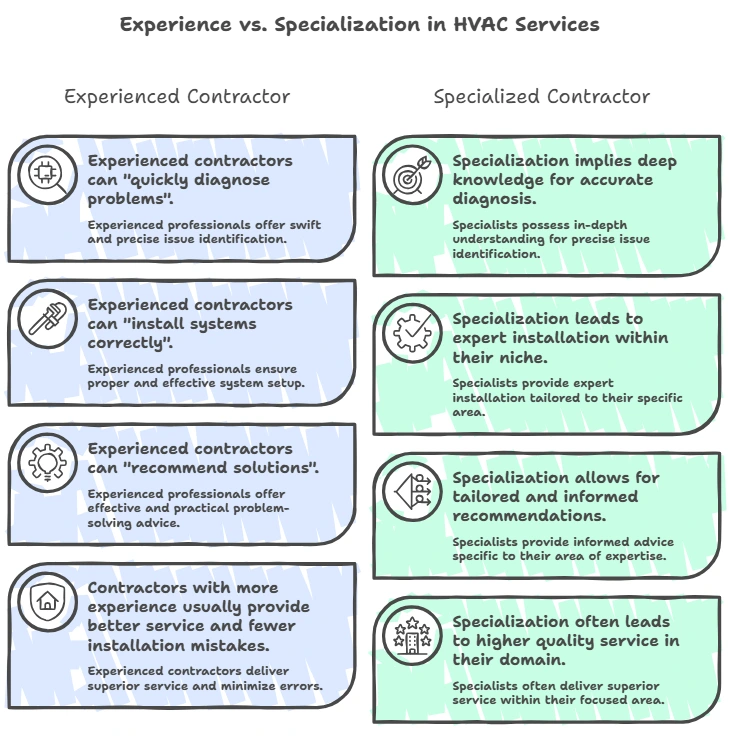
Experience matters a lot in HVAC installation and repair. An experienced contractor can quickly diagnose problems, recommend solutions, and install systems correctly.
Ask these questions:
- How many years have you been in business?
- Do you specialize in residential HVAC?
- Have you installed this HVAC brand before?
- Do you handle repairs and maintenance?
- Can you perform load calculations?
Contractors with more experience usually provide better service and fewer installation mistakes.
Read Reviews and Testimonials
Online reviews are one of the best ways to evaluate HVAC contractors. Look for reviews on:
- Yelp
- Better Business Bureau
- Home service websites
When reading reviews, look for patterns such as:
- Customer service quality
- On-time service
- Pricing transparency
- Installation quality
- Problem resolution
- Professional behavior
Avoid contractors with many negative reviews or unresolved complaints.
Ask for References
Good HVAC contractors should be able to provide references from previous customers. Talking to past clients helps you understand the contractor’s work quality and reliability.
Ask references questions like:
- Was the project completed on time?
- Were there unexpected costs?
- Did the system work properly after installation?
- Was the contractor professional?
- Would you hire them again?
References provide real-world proof of the contractor’s work quality.
Compare Written Estimates
Never hire an HVAC contractor without getting multiple written estimates. Comparing estimates helps you understand market pricing and avoid overpaying.
What Should Be Included in an Estimate
| Item | Description |
|---|---|
| Equipment cost | HVAC unit price |
| Labor cost | Installation charges |
| Timeline | Project duration |
| Warranty | Equipment and labor warranty |
| Permits | Permit costs |
| Total cost | Final price |
| Payment schedule | Deposit and payments |
Avoid contractors who give verbal estimates only.
Ask About Warranties and Guarantees
Warranties protect your investment and ensure peace of mind. There are usually two types of HVAC warranties:
- Manufacturer warranty (equipment)
- Labor warranty (installation work)
A good HVAC contractor should offer at least a 1-year labor warranty.
Always ask:
- What does the warranty cover?
- How long is the warranty?
- Is maintenance required to keep warranty valid?
- Are parts included?
Evaluate Communication and Professionalism
Professional contractors communicate clearly, answer questions, and explain technical details in simple language.
Signs of a professional HVAC contractor:
- Arrives on time
- Provides written estimates
- Answers questions clearly
- Explains installation process
- Offers maintenance plans
- Wears company uniform
- Provides business card and documentation
Poor communication often leads to poor service.
Look for Energy Efficiency Knowledge
Modern HVAC systems focus heavily on energy efficiency. A good contractor should understand:
- SEER ratings
- Energy Star systems
- Smart thermostats
- Zoned HVAC systems
- Heat pumps
- Insulation recommendations
- Duct sealing
- Load calculations
Energy-efficient systems reduce electricity bills and improve home comfort.
Understand Pricing and Payment Terms
Pricing should always be clear and written in a contract. Be careful with contractors who:
- Ask for full payment upfront
- Offer extremely low prices
- Refuse written contracts
- Add hidden charges later
Typical HVAC payment structure:
| Stage | Payment |
|---|---|
| Contract signing | 10–30% |
| Equipment delivery | 30–40% |
| Project completion | Remaining balance |
Never pay full amount before project completion.
Red Flags to Avoid When Hiring HVAC Contractors
Here are some warning signs to watch for:
- No license
- No insurance
- Extremely low estimates
- No written contract
- No physical address
- Poor online reviews
- High-pressure sales tactics
- Asking for full payment upfront
- No references
- Unprofessional behavior
If you see these red flags, choose another contractor.
Final Hiring Checklist
Use this checklist before hiring an HVAC contractor:
| Checklist Item | Yes/No |
|---|---|
| Licensed contractor | |
| Insured company | |
| Good reviews | |
| Written estimate | |
| Warranty offered | |
| References provided | |
| Experience verified | |
| Contract signed | |
| Payment schedule agreed |
This checklist helps ensure you hire the right professional.
FAQs
How do I choose the best HVAC contractor?
Check licensing, insurance, reviews, references, written estimates, warranties, and experience before hiring an HVAC contractor.
How many HVAC quotes should I get?
You should get at least 3 quotes from different HVAC contractors before making a decision.
What questions should I ask an HVAC contractor?
Ask about licensing, insurance, experience, warranties, project timeline, permits, and maintenance services.
How much does HVAC installation cost?
HVAC installation typically costs between $5,000 and $12,000 depending on system size and home size.
Should I repair or replace my HVAC system?
If your system is over 12–15 years old and repair costs are high, replacement may be the better option.
How long does HVAC installation take?
Most HVAC installations take 1–3 days depending on system complexity and ductwork requirements.
Conclusion
Understanding How to Choose the Right HVAC Contractor for Your Home is essential for protecting your investment and ensuring your HVAC system works efficiently for years. The right contractor will be licensed, insured, experienced, and transparent about pricing and warranties.
Always compare estimates, check reviews, verify certifications, and ask questions before making your final decision. Taking the time to choose the right HVAC contractor can save you thousands of dollars, improve your home comfort, and extend the life of your heating and cooling system.
By following the tips in this guide, you’ll be confident in selecting a professional HVAC contractor who delivers high-quality work and reliable service.


