

Hiring a skilled home addition contractor is one of the smartest decisions a homeowner can make when the need for more space arises. Whether you are dreaming of a bigger kitchen, an extra bedroom, or a sunlit family room, a professional contractor turns that vision into a safe, functional, and beautifully finished part of your home. This guide walks you through everything you should know before starting your project.
- Why Homeowners Choose to Add On Instead of Move
- What Does a Home Addition Contractor Actually Do
- Types of Home Additions Contractors Commonly Build
- Qualities to Look For in a Home Addition Contractor
- The Home Addition Process from Start to Finish
- Tips for a Smooth Home Addition Experience
- Conclusion
- Frequently Asked Questions
Why Homeowners Choose to Add On Instead of Move
Many families reach a point where their current home no longer fits their lifestyle. Instead of going through the stress of selling and relocating, more homeowners are choosing to expand where they already live.
More Space Without Losing Your Neighborhood
Staying in a familiar neighborhood matters. Kids stay in the same schools, commutes stay the same, and community ties remain intact. A home addition allows you to grow your living space while keeping everything else the same.
Personalized Design for Your Lifestyle
A home addition contractor works closely with you to design a space that truly reflects how you live. Whether it is a home office, a guest suite, or an expanded kitchen, the addition is built around your daily needs rather than someone else’s floor plan.
What Does a Home Addition Contractor Actually Do
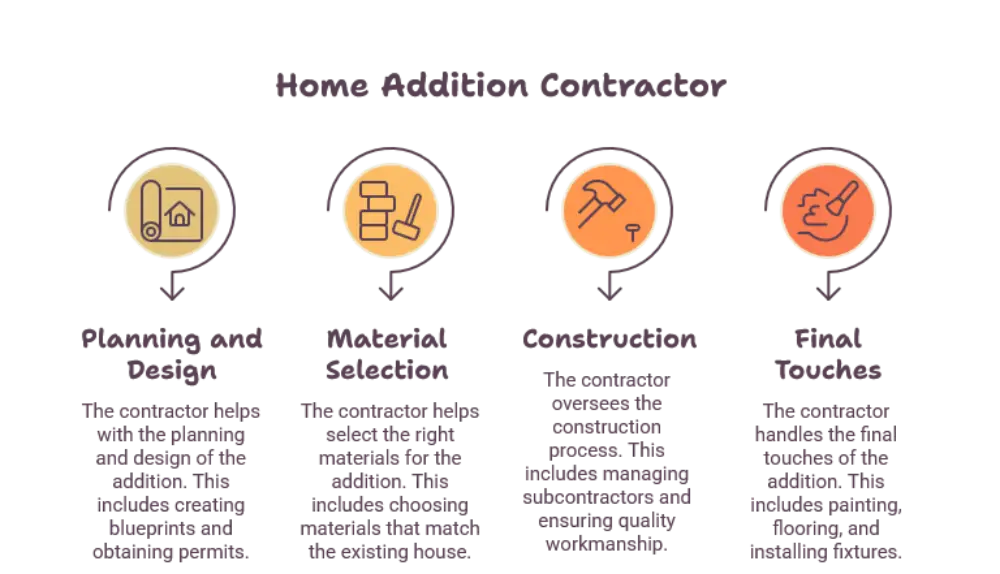
A home addition contractor manages every stage of the expansion process. Their role goes far beyond construction alone.
Planning and Design Support
Contractors often collaborate with architects or offer in house design services to help shape the layout, flow, and style of the new space so it blends naturally with your existing home.
Permits and Local Building Codes
Every addition must follow local zoning rules and building codes. A reliable contractor handles the paperwork, inspections, and approvals so you don’t have to navigate confusing regulations alone.
Structural and Mechanical Work
From foundations to framing, and from electrical wiring to plumbing, a qualified contractor ensures every technical element of the addition is done safely and correctly.
Finishing Touches
Flooring, painting, cabinetry, and trim work are completed with the same attention to detail as the structural work, giving the addition a seamless, move in ready feel.
Types of Home Additions Contractors Commonly Build
Home additions come in many forms depending on your goals and the layout of your property.
Room Additions
A single new room, such as a bedroom, office, or den, is one of the most requested types of additions because it directly solves a space shortage.
Second Story Additions
When there isn’t enough room to expand outward, building upward is a smart solution. Second story additions add significant square footage without reducing yard space.
Sunrooms and Enclosed Porches
These additions bring in natural light and create a relaxing space to enjoy the outdoors without leaving the comfort of home.
In Law Suites
Multigenerational living has become increasingly common, and many homeowners add a private suite complete with its own entrance, bathroom, and small kitchenette.
Garage Conversions and Extensions
Some homeowners choose to extend or convert their garage into livable space, turning underused square footage into something functional.
Qualities to Look For in a Home Addition Contractor
Not every contractor is the right fit for every project, so knowing what to look for helps you make a confident choice.
Proper Licensing and Insurance
A trustworthy contractor should be fully licensed and insured, protecting both the workers and your property throughout the project.
Strong Portfolio of Past Work
Reviewing completed projects gives you a clear sense of the contractor’s style, craftsmanship, and ability to handle different types of additions.
Clear Communication
A good contractor keeps you informed at every stage, explains timelines clearly, and answers your questions without confusion or delay.
Positive Client Feedback
Reviews and testimonials from previous homeowners offer honest insight into what it is like to work with a particular contractor.
The Home Addition Process from Start to Finish
Understanding the general process helps set realistic expectations for your project.
Initial Consultation
The contractor visits your home, listens to your goals, and evaluates the space to determine what is possible.
Design and Planning
Once the vision is clear, detailed plans are created, including layout, materials, and structural requirements.
Permitting Stage
Necessary permits are filed and approved before any construction begins.
Construction Phase
This includes site preparation, framing, roofing, electrical and plumbing work, insulation, drywall, and finishing details.
Final Walkthrough
Before the project is considered complete, the contractor walks through the addition with you to confirm everything meets expectations.
Tips for a Smooth Home Addition Experience
A little preparation goes a long way in keeping the project stress free.
Communicate Your Vision Clearly
The more specific you are about your needs and style preferences, the easier it is for the contractor to bring your vision to life.
Prepare for Some Disruption
Construction naturally comes with noise and activity. Planning ahead for daily routines during this time makes the process smoother.
Stay Involved
Regular check ins with your contractor help ensure the project stays aligned with your expectations from beginning to end.
Conclusion
A home addition contractor plays a vital role in transforming your home into a space that truly fits your life. From the earliest design ideas to the final finishing touches, the right contractor brings expertise, structure, and craftsmanship to every step of the journey. With careful planning and a trusted professional by your side, expanding your home can be a smooth and rewarding experience that adds lasting comfort and value to your property.
Frequently Asked Questions
What does a home addition contractor do?
A home addition contractor manages the design, permitting, construction, and finishing of a new space added to an existing home, ensuring the project is safe, functional, and well built.
How long does a typical home addition take to complete?
The timeline varies depending on the size and complexity of the project, but most additions take several weeks to a few months from planning to completion.
Do I need a permit for a home addition?
Yes, most home additions require permits, and a professional contractor typically handles the application and approval process on your behalf.
Can a home addition match the style of my existing house?
Absolutely. Experienced contractors design additions to blend seamlessly with the existing architecture, materials, and overall style of your home.
What type of home addition adds the most usable space?
Second story additions and full room additions typically provide the most usable square footage, especially for homes with limited lot space.


