


When you are planning a home renovation, a new build, or even a small remodeling job, one decision matters more than almost anything else: choosing a licensed general contractor. Many homeowners underestimate how much this single choice can affect the outcome of their project. A licensed general contractor brings legal accountability, technical expertise, and peace of mind that an unlicensed worker simply cannot offer. In this post, we will explore what it really means to hire a licensed general contractor, why licensing matters so much, and how it protects you from unnecessary risks.
- What Is a Licensed General Contractor
- Why Hiring a Licensed General Contractor Matters
- How a Licensed General Contractor Protects Homeowners
- The Role of a Licensed General Contractor in Project Management
- Licensed General Contractor Versus Unlicensed Workers
- Qualities to Look for in a Licensed General Contractor
- How to Verify a Licensed General Contractor
- Final Thoughts on Hiring a Licensed General Contractor
- Frequently Asked Questions
What Is a Licensed General Contractor
A licensed general contractor is a construction professional who has met specific state or local requirements to legally manage and oversee construction projects. These requirements typically include passing exams, proving years of relevant experience, carrying insurance, and following strict building codes. Unlike unlicensed workers, a licensed general contractor is held accountable by a governing body, which means they must follow ethical and professional standards throughout every project.
Licensing is not just a formality. It is a structured system designed to ensure that the person managing your construction project actually understands building codes, safety regulations, and proper construction techniques. When you hire a licensed general contractor, you are choosing someone who has demonstrated real competency rather than someone who simply claims to have skills.
Why Hiring a Licensed General Contractor Matters
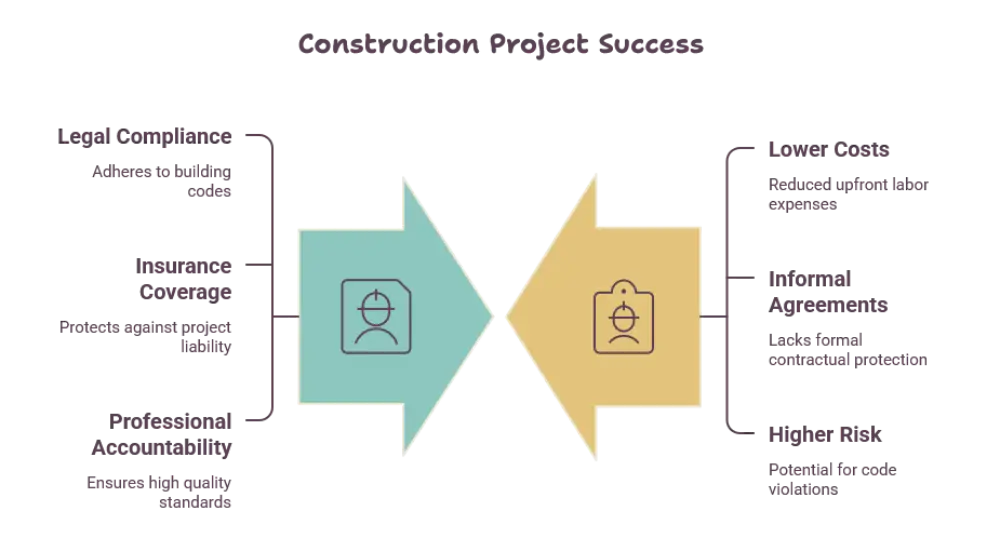
The importance of working with a licensed general contractor becomes clear once you understand the risks of skipping this step. Construction projects involve electrical work, plumbing, structural changes, and safety codes that must be followed precisely. A licensed general contractor understands these requirements and ensures that every part of the project meets legal standards.
Without proper licensing, a contractor may not be familiar with current building codes, which can lead to costly mistakes, failed inspections, or even safety hazards. A licensed general contractor reduces these risks significantly because they are required to stay updated on changing regulations and best practices in the industry.
Some key reasons hiring a licensed general contractor matters include:
- They are legally accountable for the quality and safety of their work
- They carry insurance that protects homeowners from liability
- They are familiar with local permits and building codes
- They have proven experience through required licensing exams
- They are more likely to deliver consistent and professional results
How a Licensed General Contractor Protects Homeowners
One of the biggest advantages of hiring a licensed general contractor is the legal protection it offers homeowners. If something goes wrong during construction, such as property damage or an injury on site, a licensed general contractor typically carries liability insurance and workers compensation coverage. This means homeowners are not left financially responsible for accidents that occur during the project.
In addition, many states require licensed general contractors to provide warranties on their work. This adds another layer of protection, ensuring that any issues that arise after project completion can be addressed without additional cost to the homeowner. Without this licensing requirement, homeowners may have little to no recourse if problems occur.
A licensed general contractor also ensures that all necessary permits are obtained before construction begins. Skipping permits can lead to legal trouble, fines, or complications when selling the home in the future. Because licensed general contractors are required to follow permitting processes, homeowners can avoid these issues entirely.
The Role of a Licensed General Contractor in Project Management
A licensed general contractor does more than just oversee labor. They act as the central point of communication between homeowners, subcontractors, suppliers, and inspectors. This coordination is essential for keeping a project organized and on schedule.
Because a licensed general contractor has experience managing multiple aspects of construction, they can anticipate potential problems before they escalate. This includes managing timelines, ensuring materials arrive when needed, and coordinating different trades such as electricians, plumbers, and carpenters. Their experience allows them to keep the project running smoothly from start to finish.
This level of organization is especially valuable for larger projects, where multiple teams need to work together efficiently. A licensed general contractor brings structure and accountability to what could otherwise become a chaotic process.
Licensed General Contractor Versus Unlicensed Workers
It is important to understand the difference between a licensed general contractor and someone who works without proper licensing. While unlicensed workers may sometimes offer to complete projects, they often lack the formal training, insurance, and accountability that come with licensing.
Working with a licensed general contractor means you are protected by a system designed to hold professionals accountable. If a dispute arises, homeowners working with a licensed general contractor often have access to formal complaint processes through licensing boards. This is not typically available when working with unlicensed individuals.
Choosing a licensed general contractor is not just about following the law. It is about ensuring that your investment, your home, and your safety are protected throughout the entire construction process.
Qualities to Look for in a Licensed General Contractor
When searching for a licensed general contractor, there are a few important qualities to keep in mind. These qualities help ensure that you are working with someone who will manage your project responsibly and professionally.
Key qualities to look for include:
- Verified licensing status through the appropriate state or local board
- Clear communication throughout the planning and construction process
- Strong organizational skills for managing timelines and subcontractors
- A solid understanding of current building codes and safety standards
- Willingness to provide documentation such as insurance certificates
Taking the time to verify these qualities can help you choose a licensed general contractor who aligns with your expectations and project needs.
How to Verify a Licensed General Contractor
Before hiring anyone for your project, it is essential to confirm that they are truly a licensed general contractor. Most states maintain an online database where homeowners can search for a contractor’s license number and verify its status. This step is simple but often overlooked.
When verifying a licensed general contractor, check that their license is active, matches the type of work being performed, and has no unresolved disciplinary actions. This extra step of due diligence ensures that you are working with a legitimate professional who meets all legal requirements.
Asking for proof of insurance is another important step. A licensed general contractor should be able to provide documentation showing both liability insurance and workers compensation coverage. This protects you from potential financial responsibility if accidents occur during the project.
Final Thoughts on Hiring a Licensed General Contractor
Choosing a licensed general contractor is one of the most important decisions you can make when planning a construction or renovation project. From legal protection and insurance coverage to professional accountability and code compliance, the benefits of working with a licensed general contractor are significant. Taking the time to verify credentials and ask the right questions ensures that your project is handled safely, efficiently, and professionally from start to finish.
Frequently Asked Questions
What does it mean when a contractor is licensed?
It means the contractor has met state or local requirements, including exams, experience verification, and insurance, to legally perform construction work.
Why should I hire a licensed general contractor instead of an unlicensed worker?
A licensed general contractor offers legal accountability, insurance protection, and proven knowledge of building codes that unlicensed workers may not provide.
How can I verify if a contractor is actually licensed?
You can check your state’s licensing board website, where most maintain searchable databases to confirm a contractor’s license status.
Does a licensed general contractor need insurance?
Yes, most licensing requirements include proof of liability insurance and workers compensation coverage to protect homeowners from financial risk.
What happens if I hire an unlicensed contractor and something goes wrong?
Homeowners may have limited legal recourse and could be held financially responsible for damages or injuries that occur during the project.


