


A reliable Construction Project Planning Guide is the foundation of every successful build, whether it is a small renovation or a large commercial development. Good planning keeps teams aligned, reduces confusion on site, and helps projects move forward smoothly from the first sketch to the final walkthrough. In this guide, we will walk through the key stages, tools, and practices that make construction planning effective and easy to follow.
- Why Construction Project Planning Matters
- Key Stages of Construction Project Planning
- Essential Elements of a Strong Construction Plan
- Tools That Support Construction Planning
- Common Challenges in Construction Planning
- Best Practices for Effective Construction Planning
- Conclusion
- Frequently Asked Questions
Why Construction Project Planning Matters
Construction projects involve many moving parts. Materials, labor, permits, weather, and design changes all interact with each other, and even small oversights can cause major delays. A clear planning process gives everyone involved, from architects to site supervisors, a shared understanding of what needs to happen and when.
Reducing Confusion On Site
When plans are documented clearly, workers spend less time guessing what comes next. This keeps momentum steady and reduces the back and forth that often slows down a job site.
Supporting Better Communication
A written plan becomes a shared reference point. Everyone can check the same document instead of relying on memory or scattered conversations, which helps avoid mistakes caused by miscommunication.
Key Stages of Construction Project Planning
Every construction project moves through a series of stages. Understanding these stages helps teams prepare properly and avoid skipping important steps.
Pre Construction Planning
This is where the project truly begins. It includes defining the scope of work, gathering site information, and reviewing design documents. Site surveys, soil testing, and zoning checks usually happen during this stage so that the project starts on solid footing.
Design and Documentation
Architectural drawings, engineering plans, and technical specifications are finalized here. Clear documentation prevents confusion later and gives contractors a precise reference for execution.
Permitting and Approvals
Before any physical work begins, the necessary permits and approvals must be secured. This stage often involves coordination with local authorities and can shape the overall timeline of the project.
Scheduling and Sequencing
Once documentation is ready, the project team develops a schedule that outlines the order of tasks. Proper sequencing ensures that activities like foundation work, framing, and finishing happen in a logical and efficient order.
Execution and Monitoring
This is the construction phase itself. Site supervisors track daily progress, coordinate subcontractors, and confirm that work matches the approved plans and quality standards.
Closeout and Handover
The final stage includes inspections, punch list completion, and handing over the finished structure to the owner. Proper documentation during closeout also supports future maintenance.
Essential Elements of a Strong Construction Plan
A well built plan is more than a schedule. It brings together several elements that work together to keep the project on track.
Scope Definition
A clear scope outlines exactly what the project includes. This helps prevent misunderstandings between the client, design team, and contractors.
Risk Assessment
Identifying potential risks early, such as site access issues or seasonal weather patterns, allows teams to prepare contingency plans instead of reacting under pressure.
Resource Planning
This involves mapping out labor, equipment, and material needs at each stage of the project. Proper resource planning helps avoid unnecessary downtime.
Quality Control Measures
Setting clear quality standards from the start ensures that work is inspected consistently throughout the project rather than only at the end.
Safety Planning
Construction sites carry inherent risks, so safety protocols should be built into the plan from day one. This includes site specific hazard assessments and clear emergency procedures.
Tools That Support Construction Planning
Modern construction planning often relies on digital tools that make coordination easier across teams and locations.
Project Management Software
These platforms help teams track tasks, timelines, and responsibilities in one place, reducing reliance on scattered spreadsheets or paper documents.
Building Information Modeling
Building Information Modeling, often called BIM, allows teams to visualize the entire structure digitally before construction begins. This helps identify design conflicts early.
Scheduling Tools
Scheduling software helps visualize task sequences and dependencies, making it easier to spot potential bottlenecks before they affect the timeline.
Communication Platforms
Centralized communication tools keep site teams, designers, and project managers connected in real time, which is especially useful for large or multi site projects.
Common Challenges in Construction Planning
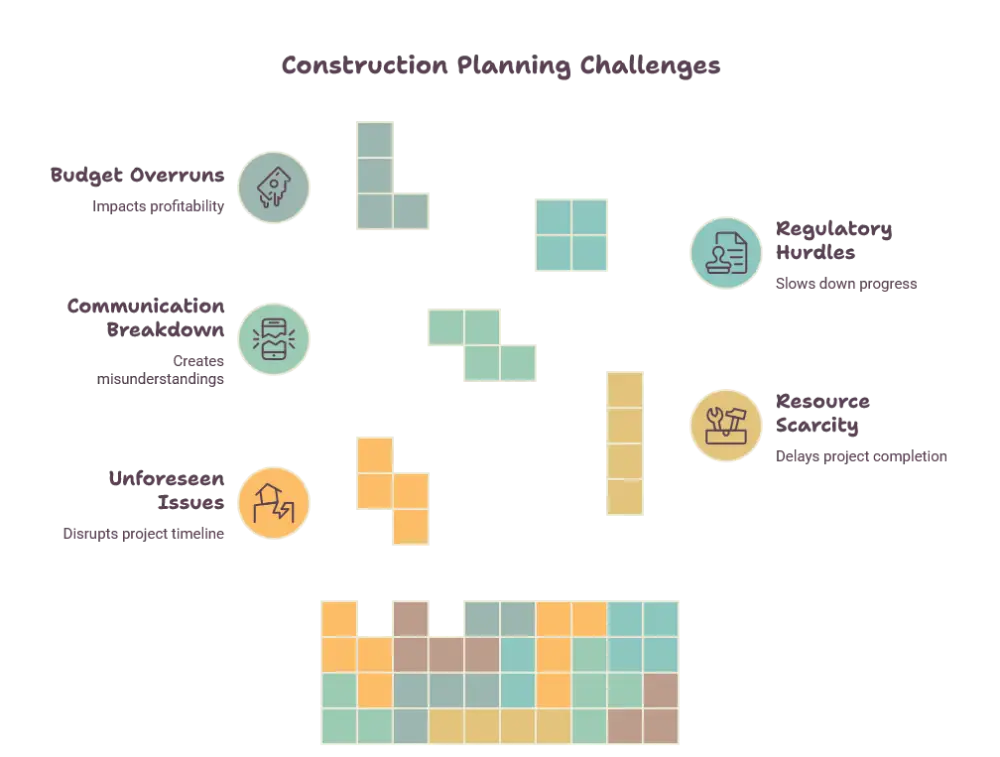
Even with a solid plan, construction projects can face unexpected hurdles. Recognizing these challenges early makes it easier to respond effectively.
Weather Disruptions
Outdoor work is naturally affected by weather conditions. Building flexibility into the schedule helps absorb minor delays without derailing the entire project.
Design Changes
Mid project design changes can affect timelines and coordination. Clear change management processes help teams adapt without losing track of progress.
Coordination Across Teams
Large projects often involve multiple contractors and subcontractors. Strong communication and clearly defined responsibilities help keep everyone aligned.
Site Conditions
Unexpected site conditions, such as underground utilities or soil issues, can require plan adjustments. Early site investigation reduces the chances of major surprises later.
Best Practices for Effective Construction Planning
Following a few consistent habits can significantly improve how smoothly a construction project runs.
Start With Clear Documentation
Detailed drawings and specifications reduce ambiguity and give every team member a reliable reference point.
Build In Flexibility
Plans should allow room for adjustments. Construction rarely goes exactly as expected, so flexibility helps teams adapt without losing overall direction.
Maintain Regular Site Reviews
Frequent check ins between planners and site teams help catch issues early, before they grow into larger problems.
Keep Documentation Updated
As changes occur, plans and schedules should be updated promptly so that everyone is working from the same accurate information.
Prioritize Safety Throughout
Safety should never be treated as a separate task. It should be woven into every stage of planning and execution.
Conclusion
A thoughtful Construction Project Planning Guide gives every project a stronger foundation for success. By understanding the key stages, incorporating essential planning elements, using the right tools, and following proven best practices, teams can reduce confusion, improve coordination, and keep projects moving forward smoothly. Good planning does not eliminate every challenge, but it prepares teams to handle them with confidence and clarity.
Frequently Asked Questions
What is construction project planning?
Construction project planning is the process of organizing tasks, resources, and timelines to guide a construction project from start to finish in an efficient and coordinated way.
Why is planning important in construction projects?
Planning helps teams stay organized, reduces on site confusion, improves communication, and supports smoother project execution from beginning to end.
What are the main stages of a construction project?
The main stages typically include pre construction planning, design and documentation, permitting, scheduling, execution, and closeout.
What tools are commonly used in construction planning?
Common tools include project management software, Building Information Modeling, scheduling platforms, and team communication tools.
How can construction teams handle unexpected delays?
Teams can handle delays by building flexibility into schedules, maintaining regular site reviews, and updating plans promptly as conditions change.


